May 17, 2025
On May 17, 2025, my wife and I lost our son. His name is Naphtali David Pagliari. He was due around December 9, 2025. My wife was ten weeks pregnant.
That morning she noticed some bleeding. We called our midwife, and she told us what we had heard before: light bleeding can happen as the baby and the uterus connect. So we carried on with our day. We went to the store. The bleeding seemed to stop, and we let ourselves hope. Then my wife took a nap, and when she woke up it had started again. The rest of the afternoon went back and forth like that. Spotting, then nothing, then spotting. Hope, then a moment that crushed it.
By evening we wanted answers, so we went to the Emergency Room at WVU Medicine in Uniontown. I want to say this plainly because it matters. The staff there were compassionate. We asked for as little medical intervention as possible, and they respected that. Bloodwork came back normal except for slightly low potassium. Then we waited for a sonogram. We prayed. We trusted God’s will. Our church and our family were praying with us the whole time.
At one point I stepped out to get my wife some water and chapstick. When I came back, they had already wheeled her away for the sonogram. I texted the men of our church and our family and asked them to pray. Then I sat there alone and held on to Romans 8:28. “We know that all things work together for the good of those who love God, who are called according to his purpose” (CSB).
When they brought my wife back, she was crying. I knew before anyone said a word. There was no heartbeat. Our son was gone.
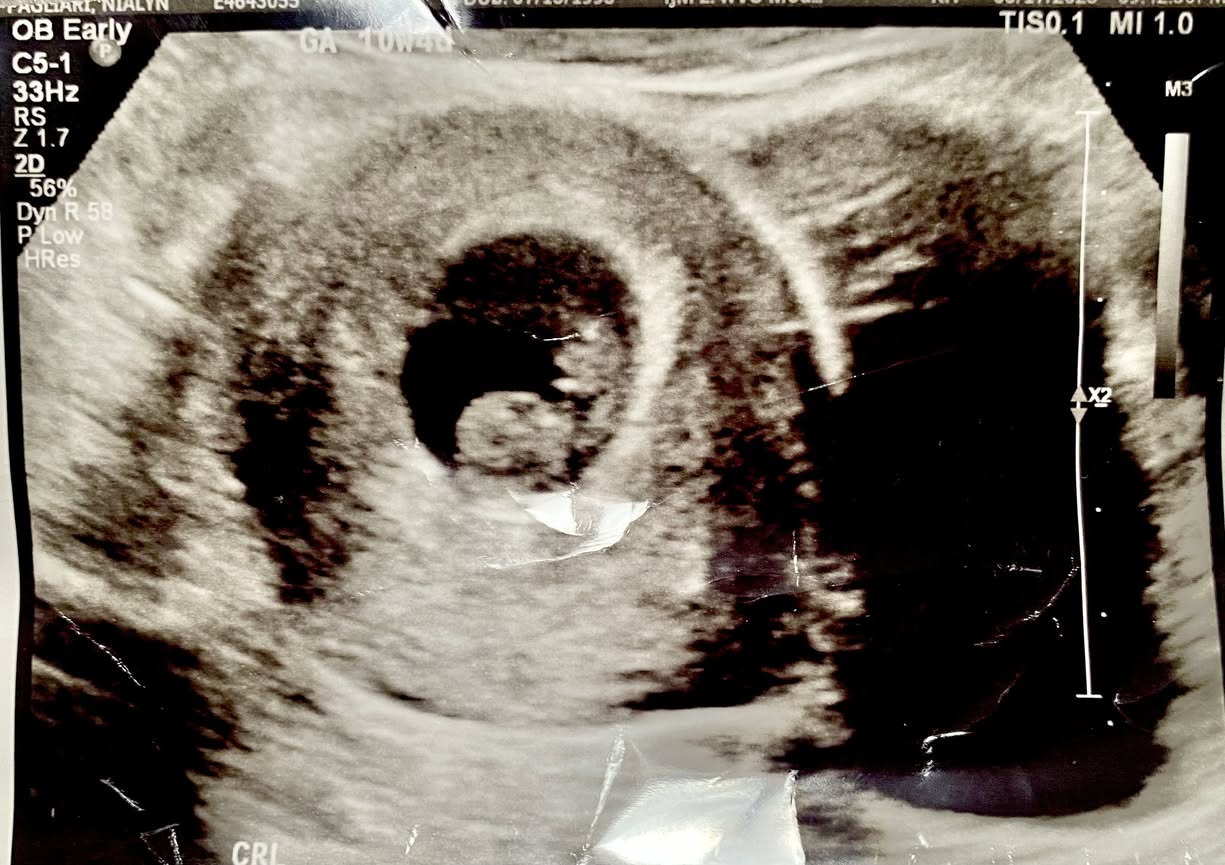
That Night
That night was quiet and heavy. We all got in the bed together and held each other and wept.
Then my wife went into labor. Not cramping. Real contractions, the same kind she had with our two previous home births. I was supposed to preach the next morning on Acts 9:32-43, the passage where Peter raises Dorcas from the dead. So I prayed for a miracle. I asked God to revive our son. His answer was different.
Around 6:00 AM on May 18, 2025, my wife gave birth to Naphtali David. He was tiny, about two inches long, and perfectly formed. We could see his eyes, his fingers, his toes. I held my wife while she trembled with the same post-birth shakes I had seen three times before, and I marveled at her. She had done everything right. She ate organic. She managed her gestational diabetes. She drank a gallon of water a day, took her prenatal vitamins, and balanced activity with rest. None of that was the problem.
I remember looking at him and thinking, this is a human. This is a life from the Lord. In his short life inside the womb, he changed how I see life itself.
Sunday Morning
We went to church that morning. We chose to worship.
My wife sang. If you know her, you know how she loves God, and she sang beautifully that morning with everything she had just been through. I could hear our children singing along with her. Their voices told me more about their maturity and their faith than anything I could have asked them.
And then I got up to preach Acts 9:32-43. I had written that sermon before any of this happened. The main point was this: walking faithfully with Jesus involves tragedy, training, and triumph. I had no idea when I wrote it that I would be preaching it the morning after we lost our son.
So I preached it. God uses tragedy throughout redemptive history to train His people. He uses it to point them to the triumph of Christ over sin, over death, over disease, and yes, over miscarriage. As Christians we have victory in this life and we have hope in the final victory still to come, because Christ has redeemed us and reconciled us to God. “But thanks be to God, who gives us the victory through our Lord Jesus Christ!” (1 Corinthians 15:57, CSB).
Our Children
Our kids have been strong through this. They still come to us with Bible verses to comfort us, and they get that from their mother. They understood that Naphtali was their brother. He is a life we will not fully know until we meet him in paradise.
I said something to my wife at the hospital that I keep coming back to. It is better to meet someone we have never known than to know someone we will never meet. That hope comes from 2 Samuel 12:22-23, where David says, “While the baby was alive, I fasted and wept because I thought, ‘Who knows? The Lord may be gracious to me and let him live.’ But now that he is dead, why should I fast? Can I bring him back again? I’ll go to him, but he will never return to me” (CSB).
We will go to him. That is what sustains us.
My Wife
I need to tell you about my wife, because none of this story makes sense without her.
Proverbs 31:25 says, “Strength and honor are her clothing, and she can laugh at the time to come” (CSB). That is her. She has a law degree from Duquesne University, and she set aside her plan to practice law for what she saw as a greater calling. She is a homemaker. She homeschools our children. She cooks from scratch, gardens, writes, and studies Scripture. She has written a book and she writes music. She performs her Redemption Vignettes at local wineries as a way to share the gospel with people who would never walk into a church. Her love for God and for her family is unmatched.
She is my helpmate and my ministry partner. She is the one who helps me work through emotions I did not know I had. Proverbs 18:22 says, “A man who finds a wife finds a good thing and obtains favor from the Lord” (CSB). I have found a very good thing.
Watching her endure this loss, labor through it, and then stand up and sing the next morning has deepened our marriage and shaped our whole family. She is the best mother I know. If you want to know why our children handled this with such maturity, look at her.
What Naphtali Accomplished
Someone once said, “We are invincible until we have accomplished all that God intends us to accomplish.” Naphtali’s life was short, but it was not wasted. He left his mark on our family and on our church. Because of him, we can now sit with other families walking through miscarriage and actually understand. We buried him that Sunday, holding on to the hope that we will see him again.
This was the first real tragedy in eleven years of marriage. It has brought us closer, and it has taught us to hold our children a little tighter.
Because we do grieve what we will not get with him. The highs and the lows. The joys and the frustrations. The smiles and the tears, the dancing, even the disobedience. We will not see him chasing reptiles through the woods on one of our herping trips. He will not take a turn as waiter or cook at a daddy-daughter date. He will not be a ring bearer, or playfully “marry” his sister for the thousandth time. We will not have to wrangle one more little person into family worship to pray or answer a Bible question. No bedtime stories. No walks.
Every one of those missed moments is a reminder to cherish the ones I do have with the children here with us. They are 10, 6, and 2 now, and we have a two and a half month old as well. I do not want to take a second of it for granted. “Teach us to number our days carefully so that we may develop wisdom in our hearts” (Psalm 90:12, CSB).
People ask how many children we have, and we have settled on how to answer. As of today, we have five children. One is with the Lord and four are with us. We are grateful for each and every one of them.
A Garden Out of the Grave
It has been over a year now, and I can tell you some of what God has done with this.
My wife finished her book. She found a publisher who read it and chose to publish it, and Roots of Rebellion releases December 14, 2026. I do not think that is a coincidence. Out of the grave of our son has come a garden of creativity. Writing gave her a place to put the emotions and process them in the open instead of burying them. That is one of the ways the Lord has been kind to her. If you would like to read what grew out of this season, you can pre-order the book here. It would mean a great deal to her, and to me.
There is another one. On the Sunday we lost Naphtali, a couple visited our church for what was about their first time. Later that year they lost their own baby to stillbirth. Because of what we had just walked through, we were able to come alongside them. We did not have answers, and we did not pretend to. But we could sit with them and understand, and we could tell them honestly that grief takes a long time and that is okay.
Grief is an ongoing process. It is a continual reminder. It does not go away, and I do not think it is meant to. But grief is not meant to swallow you either. If you let it do what it is supposed to do, it will show you the frailty of life. It will show you how uncertain the things of this world really are. It will strip away what does not matter and show you what does. And it will point you to the one who defeated sin and death, Christ Jesus our King, who has promised to make all things new and to wipe every tear from our eyes (Revelation 21:4-5).
That is the truth we keep coming back to. God works all things together for our good and His glory. Even this.
Why I Am Sharing This
This loss took away whatever shame or misunderstanding I might have carried about miscarriage. It is okay to grieve. It is okay to wonder and to dream about who he would have been. But through all of it, God stays above all. His goodness, His kindness, His grace, and His mercy are what have held us up.
Our prayer is that our children will grow up in the faith, glorifying God and enjoying Him forever, the way their mother and father are trying to show them. And we want to honor Naphtali’s life by telling his story, by helping take the silence off of miscarriage, and by comforting others with the comfort we have received.
“Now may the God of hope fill you with all joy and peace as you believe so that you may overflow with hope by the power of the Holy Spirit” (Romans 15:13, CSB).
Grace and Peace,
Phil